
Redefining Community Health:
Lessons in Listening, Trust, and Accountability
In the latest episode of More Health, Less Healthcare, Peter Boland takes us on a journey through innovative models for community health investments that genuinely listen and respond to community needs—not just on paper, but in practice. Here’s what you need to know from this insightful installment:
Peter Boland underscores the pitfalls of top-down solutions (“paternalistic and ineffective”) and explains why real change starts with asking communities what they need, not telling them what to accept. Programs must pivot based on this feedback, which, as Peter Boland notes is surprisingly rare in healthcare.
Presbyterian Health (Albuquerque, NM): Grounded in four core beliefs—shared value of health, cross-sector collaboration, strong systems integration, and equity as a non-negotiable requirement. Their commitment to equitable, community-driven design sets a new industry standard.
Bon Secours (West Baltimore): CEO George Club insists community members, not executives, set the agenda. Their “four ways of being”—asset-based, relational, collaborative, and dutiful—position the community as the true expert.
Blue Cross Blue Shield North Carolina: Tackling social determinants of health at scale with multi-sector partnerships, and investing in training diverse rural providers.
Hawaii Community Foundation: Pioneering “trust-based philanthropy” focused on unrestricted, responsive grants. Their process empowers grantees to use funds for what works locally—not just what fits a funder’s theory.
University Hospitals Kansas City: Their cultural health navigator role merges interpretation, community outreach, and intelligence-gathering, bringing patient voices directly to hospital leadership.
Vanderbilt Medical Center: By screening for health literacy, they discovered a fifth of patients didn’t fully understand medical instructions—a finding with major implications for patient outcomes.
NYC WIC Program: First-person data collection revealed bureaucratic friction preventing eligible mothers from accessing benefits, prompting policy and process changes.
Across every example, Peter Boland observes that lasting impact comes from a relentless commitment to listening, adapting, and partnering with communities as the authority on health needs—not imposing solutions from above.
How Employers Can Use Their Buying Power to Change Healthcare for Good
In our latest episode, Peter Boland explores a transformative question: What if employers used their full leverage to reshape employee healthcare — and invested the savings back into their communities?
Most U.S. employers have enormous purchasing power and a unique relationship with their workforce, yet often act as passive consumers of traditional insurance products. Peter Boland argues that this status quo is not inevitable — and shares examples of what’s possible when employers become proactive health investors instead.
Peter Boland breaks down the Health Rosetta model, built around eight core components:
Transparent networks with known prices and outcomes
Individualized health stewardship
Advanced primary care with aligned incentives
Active, independent plan management
Transparency in pharmacy benefits
Rigorous oversight of major and outlier cases
High-performance plan design
Transparent, aligned relationships with benefits advisors
In short: Remove conflicts of interest, align incentives, and focus on actual outcomes.
With proven models and compelling results, Peter Boland challenges employers to stop being passive purchasers. The tools and blueprints are already here; what’s needed is a proactive choice at the board level to invest wisely—and reinvest dividends back into the community.
Housing as Healthcare:
When Communities Decide Where Investments Go
Peter Boland dives deep into the transformative power of community-driven housing investments and how shifting incentives—and power—can radically improve health equity.
Featured Discussions
Healthy Homes Des Moines
Tackling childhood asthma and allergies at the source, this program goes directly into homes, identifies environmental triggers, and provides meaningful repairs and supplies. The lesson? Fix the environment, not just the patient.
The SPARC Initiative in Oakland
Through collective action from over 500 local stakeholders, SPARC is moving affordable housing and anti-displacement efforts forward by putting decisions in the hands of residents. Real systemic change: the City of Oakland now rewards developers who partner with the community.
Bon Secours' Audacious Shift in Baltimore
In one of the boldest moves yet, Bon Secours sold its century-old hospital and reinvested funds to build stable housing, educational spaces, and job opportunities. Their philosophy: work for the community, not just with it.
Key Takeaways
Community is the True Unit of Intervention. Programs deliver better results when residents decide what's needed and where investment goes.
Structural Change Beats Status Quo. Changing local government and health system policies shifts real power to those most affected.
Tangible Returns. Investments in stable housing yield social returns that rival, if not outperform, traditional financial instruments—and improve health in the process.
Empowering communities isn’t just a theory—it’s happening now, and it’s changing lives. Be sure to catch Peter Boland's insightful analysis and real-world examples by listening to the full podcast.
Treating Neighborhoods as Patients:
Hospital-Led Housing Initiatives
Welcome back to More Health, Less Healthcare with Peter Boland. In this, we dive into why housing is far more than just a place to live—it's a clinical intervention that can shape the health of entire communities.
Key Takeaways
Treating Neighborhoods as the Patient:
Peter Boland explores how Nationwide Children’s Hospital in Columbus redefined its mission, tackling intergenerational poverty by viewing the community itself as the patient. Investing in housing revitalization led to a 20.8% drop in ER visits and a 12.7% reduction in hospital admissions in targeted neighborhoods.
Institutional Investment Over Charity:
Both Nationwide Children’s and Boston Medical Center demonstrate the power of allocating real capital—not just charitable donations—toward social infrastructure. Boston Medical Center devoted its entire $6.6 million Determination of Need fund to housing initiatives, securing long-term stability for patients with chronic health issues.
Integration as Prevention:
Blue Cross Blue Shield of Minnesota’s Center of Prevention illustrates how scaling institutional efforts—integrating affordable housing, food access, and tobacco cessation—can transform both health outcomes and communities.
Why It Matters
Short-term thinking doesn’t move the needle on health equity or chronic disease. As Peter Boland puts it, “Institutions need to change, not people.” Long-term, strategic investments in housing create real and measurable health improvements.
What If They Got The Incentives Right?
How Medically Tailored Food Programs Outperform Drugs in Clinical Outcomes
In our latest episode, Peter Boland dives deep into the fascinating and urgent topic of Food as Medicine—a movement proving that changing what's on our plates can save both lives and dollars.
Key Takeaways
• Geisinger Fresh Food Pharmacy
• Peter Boland highlights that Geisinger’s program for type 2 diabetes achieved an 80% reduction in healthcare costs—dropping from $240,000 to just $48,000 per patient. Patients also saw improved HbA1c, lower BMI and blood pressure, and 10–50 pounds in weight loss.
• Boston Medical Center’s Comprehensive Approach
• The first hospital in the U.S. to fully integrate food as medicine, Boston Medical Center serves 7,000 people monthly—including a robust food pantry, rooftop farm, and teaching kitchen. Their efforts go further by embedding legal assistance to help patients with housing, utilities, and benefits issues.
• Cleveland Clinic’s Group Appointments
• Using shared medical appointments, patients support each other through lifestyle changes addressing root causes of chronic disease. Not only does this model increase efficiency, but the social reinforcement leads to better outcomes and reduced hospitalizations.
“Food is medicine and the industry’s continued reluctance to treat it that way is costing money and lives at the same time.” — Peter Boland
What if Healthcare Incentives Were Right?
Insights from Pathways, Houston Methodist and Blue Cross
In our latest episode of More Health, Less Healthcare, Peter Boland tackles a fundamental question: What if the healthcare industry got the incentives right? Drawing from insights in the comprehensive Health Equity Case Studies Handbook, Peter Boland summarizes game-changing models and the powerful results that emerged when organizations shifted to pay-for-outcomes.
Key Takeaways from the Episode
Pay for Outcomes, Not Activities:
Most healthcare payments go toward procedures and visits, not true health improvements. Peter Boland challenges us to consider: What if we tied payment to real results, just like we do in other industries?
Success Stories Highlighted:
Pathways Community Hub:
Community health workers are paid when problems are solved, not just for showing up. This model led to a dramatic increase in healthy birth weights and better prenatal outcomes.
Houston Methodist:
Giving doctors access to monthly, personalized data on their practice resulted in lowered hospital admissions, fewer readmissions, and millions in shared savings.
Blue Cross Blue Shield of Massachusetts:
Their alternative quality contract ties provider payments to patient outcomes and equity—not just volume. This approach slowed spending and improved care for all populations.
Measuring What Matters:
Across the board, organizations that “measure what matters and tell the truth about it” saw behavior change and improved results.
Despite abundant evidence, Peter Boland asks why the industry hasn’t widely adopted these models. The answer: it’s not a lack of information—the missing ingredient is institutional will.
Redefining Maternal Health:
Coverage, Access, and Accountability
In this episode, Peter Boland zooms out to examine why maternal health outcomes in the U.S. are a direct result of the systems and policies we build, not random chance. Too often, policy treats pregnancy as a brief event—missing the reality that maternal health is a long-term continuum stretching from pre-pregnancy, through birth, and into the year after.
It’s not enough to offer coverage on paper or just measure outcomes—someone has to be responsible for improving them. Tying incentives, contracts, and regulations to real results is key.
Listen to the episode for the full story on how smarter policy can save lives and deliver real value—financially and in human well-being.
The Hidden Tax on Motherhood: Unseen Costs and Community Impact
In our latest episode of More Health, Less Healthcare, Peter Boland uncovers a crucial and often overlooked issue: the “hidden tax” on motherhood. Unlike the taxes you see on receipts, this one is paid in hospital bills, lost wages, and missed life chances — with the biggest burden falling on those who can least afford it.
These costs may be invisible, but their impact is real — affecting hospital bills, lost wages, long-term health, and community stability. As Peter points out at, the system’s shortcomings disproportionately affect families with fewer resources, stretching gaps in care into dangerous and expensive hazards.
We all pay the price for a failing maternal health system, but not equally. Whether you’re a healthcare leader, employer, or policymaker, Peter calls for leadership and accountability:
Make maternal care essential
Prioritize prevention in benefits and policies
Track and address outcome disparities
As Peter closes, the real question is whether we keep ignoring this hidden tax — or decide, as a community and society, to change it.
The Hidden Costs of Motherhood
The Need for Systemic Change in Maternal Care
In this thought-provoking episode of Author Podcasts, Peter Boland introduces the "More Health, Less Healthcare" series by asking a bold question: What if our healthcare system isn't truly designed to create health, but rather to respond to illness? Using maternal health as a lens, Peter Boland explores the disconnect between what we claim to value and what our system actually delivers.
A Shortage of Health, Not Medical Care: Despite leading the world in healthcare spending, the U.S. continues to struggle with outcomes in life expectancy, chronic disease, and especially maternal health.
Maternal Health as a Mirror: Our approach to maternal health reveals what our society truly values and exposes gaps in investment and design.
We Know What Works: Stable housing, nutritious food, consistent maternity care, mental health support, and reliable primary care are proven solutions, yet often treated as optional rather than essential.
A System Built for Sickness: The U.S. pays generously for complications and crisis interventions, but invests only cautiously in prevention and early, continuous support.
The Hidden Tax on Motherhood: Many costs and stresses facing mothers and families are embedded in how we design coverage and assign accountability—not just "bad luck," but predictable outcomes of the system.
Changing Incentives Is Key: Real change requires revisiting payment models, benefit design, and the deep incentives embedded in our health care organizations.
From Pilots to Practice: It's not enough to run small experiments—maternal health needs to be central to the mission, operations, and leadership accountability.
Peter Boland closes with an invitation: If we can’t organize our healthcare system around something as fundamental as maternal health, how can we claim to be serious about health in any other area?
Redefining Health: Moving Beyond Sickness Care in America
This week on More Health, Less Healthcare, Peter Boland delivers a compelling exploration of the fundamental flaws in our current health care system—and a roadmap for a healthier, more equitable future.
A System Built on Sickness, Not Health:
Peter Boland addresses the uncomfortable truth: The United States spends more on health care than any other rich nation, yet our overall health continues to decline. Our system is designed around treating sickness, not promoting genuine health and well-being.
Misaligned Incentives:
Despite the intentions of caring professionals, financial incentives still reward treating illness more than preventing it. The business model prospers when people are sick, not when they are healthy.Prevention is Undervalued:
Most resources go toward expensive interventions—hospitalizations, specialty drugs, procedures—while very little is invested in foundational determinants of health: stable housing, nutrition, safe neighborhoods, and accessible primary and mental health care.The Need for Stewardship:
Peter Boland calls on leaders in health plans and hospital systems to move beyond management and embrace stewardship—advocating for real change that puts consumer and community health at the center.
He challenges us all to consider: Can health care in America shift from profiting off sickness to truly creating value from health? Can leaders build systems that invest in the conditions for people to thrive?“The real measure of success is whether people and communities are better off as a result of all our efforts.” — Peter Boland
Stay tuned for more transformative discussions and solutions as we continue our journey for More Health, Less Healthcare.
Stop Doing This!
Where is Your Organization "Weathering" People?
This week on More Health, Less Healthcare, Peter Boland shines a spotlight on a concept that rarely appears in our benefit dashboards but shapes the lives of our patients, members, and colleagues daily: weathering.
What is Weathering?
As Peter Boland defines, weathering is what happens when people spend years inside systems—healthcare, employment, social services—that treat their bodies as expendable while blaming them for poor outcomes. It’s the cumulative, grinding effect of:
Racism, sexism, and poverty
Chronic stress and bureaucratic hurdles
Unstable housing and low-wage work
You see it in the 35-year-old who looks 50, in the Medicaid member labeled ‘non-compliant’ after years of navigating prior authorizations. This isn’t just a sad coincidence. As Peter Boland reminds us, weathering is a product of how our systems are built and run.
This weekend, wherever you work, notice one place where your organization is weathering people—a policy, a denial pattern, even a tone of voice. In your next meeting, ask: What would it take to stop? Not to pilot around it or build a workaround, but to actually stop.
It’s an uncomfortable conversation, but one that matches the stories we say about equity and health.
If you’re having these conversations—or struggling to start—I’d love to hear from you. Reply to this email, share your stories, and forward this episode to someone who sits in the rooms where decisions are made.
Let’s move from “normal collateral damage” to “completely unacceptable.”
Understanding Weathering:
The Hidden Cost of Chronic Stress on Maternal Health and Birth Equity
This week on More Health, Less Healthcare, Peter explored a concept that fundamentally reshapes how we think about health, equity, and the responsibilities of systems: weathering.
What is Weathering?
Once you hear the term, you can’t unhear it. Weathering isn’t just about stress or burnout — it’s the biological and societal toll that chronic stress, racism, economic instability, and bureaucratic barriers take on the body, particularly for women, long before they enter a clinic or hospital. Over time, these stressors literally age organs, increase risk of diseases, and set the stage for complications — especially in pregnancy and birth.
Looking Forward
Weathering is more than a buzzword — it’s a call for accountability. Will we keep treating symptoms, or redesign systems so that simply living and working isn’t biologically expensive?
Thank you for listening. We’ll be diving deeper into these issues in upcoming episodes. If this conversation resonates with you, let it spark new questions at your workplace, clinic, or community.
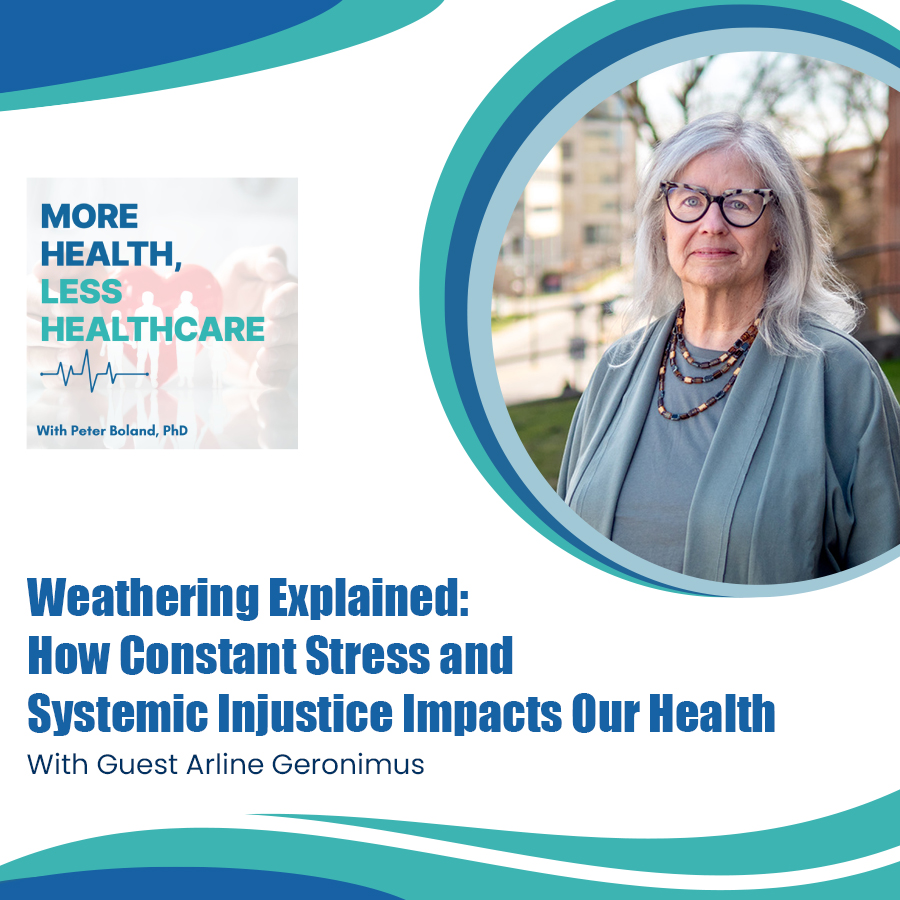
Weathering Explained: How Constant Stress and Systemic Injustice Impacts Our Health
We’re thrilled to feature Arlene, acclaimed author and professor at the School of Public Health in Michigan, recently honored by the National Academy of Medicine for her groundbreaking discovery of “weathering.” In this powerful conversation, Arlene unpacks the toll that chronic social stressors and systemic injustice have on physical health, regardless of individual habits or genetics.
Listener Takeaways
Chronic stress from social factors triggers physiological changes that don’t just go away with “healthy choices.”
Health policies and interventions must consider the lived realities of marginalized communities.
Weathering provides a powerful new lens to understand—and address—entrenched health disparities.
Scaling Impact: What Health Plans Can Learn from UPMC's Investment Framework
H
We’ve just dropped a brand new episode of More Health, Less Healthcare that zeroes in on a question at the heart of American healthcare: Can nonprofit health plans truly serve their communities while operating inside a system designed to profit from sickness?
This time, Speaker A breaks down the paradox, using Blue Cross Blue Shield of North Carolina as a case study and sharing actionable insights for boards, leaders, and anyone who cares about healthier communities.
What You’ll Learn in This Episode
Here are 5 big takeaways listeners will scoop up this week:
The Nonprofit Paradox: Why nonprofit health plans are mission-driven on paper, but financially plugged into an extractive system.
What Blue Cross NC Gets Right: Community investments in food security, housing, and rural care—and why it’s still not enough.
How to Move from Charity to Core Strategy: The next steps nonprofits can take to tie community health directly to their business models.
Accountability Starts at the Top: How boards can rewrite the “scorecard” and link executive pay to real-world community health improvements.
Sharing Power for Real Change: Why giving up board seats and bringing in new voices is critical for mission-driven transformation.
Fun Fact from the Episode
Did you know that Speaker A suggests tying up to 30% of CEO and C-suite bonuses to measurable community health metrics—like increasing life expectancy or reducing food insecurity? That’s flipping incentives in a big way!
How Nonprofit Health Plans Can Prioritize Community Health Over Profits
We just launched a powerful new episode of the More Health, Less healthcare podcast—and trust us, you don’t want to miss this one! Peter Boland takes us deep into the world of nonprofit healthcare to reveal the surprising contradictions that shape the system, using Blue Cross Blue Shield of North Carolina as a live case study.
If you’ve ever wondered why “nonprofit” doesn’t necessarily mean “mission accomplished,” this conversation will challenge your assumptions and spark new ideas about what true impact looks like in community health.
What You’ll Learn: The 5 Essential Keys
The Nonprofit Paradox Explained – Discover why nonprofit health plans, even with noble intentions, often remain tied to a model that benefits more from illness than wellness.
What Blue Cross North Carolina Is Doing Right – Explore inspiring real-world initiatives, from multimillion-dollar investments in housing and primary care to long-term commitments through foundation work.
How Nonprofit Plans Could Level Up – Hear bold strategies for building lasting change, like integrating social health services directly into benefits rather than treating them as side projects.
Bringing Community Voices Into the Boardroom – Learn how health organizations can shift power by including local voices in decision-making—and even offering board seats to those most affected by poor health.
What Real Accountability Could Look Like – Understand what happens when executive incentives and public reporting align with tangible community health outcomes.
Fun Fact of the Episode 🥳
Blue Cross and Blue Shield of North Carolina invested $10 million over ten years to help communities tackle the root causes of poor health—empowering residents to define what improvement truly means for them. That’s not just philanthropy; it’s community-driven innovation in action!
How Blue Cross Used Tobacco Settlement Funds to Drive Health Equity in Minnesota
We’ve just dropped a brand new episode you won’t want to miss: “More Health, Less Healthcare: Blue Cross Blue Shield of Massachusetts, Part 2.” Hosted by Peter Boland, this episode dives deep into what happens after a health plan truly listens to its community—and why good intentions alone might not bend the cost curve for everyday families.
Here are 5 keys you’ll learn in this episode:
The Power of Real Listening
Why Blue Cross MA sat down with factory workers, teachers, union stewards, and more—and what they discovered that actuarial tables miss.Beyond “Business as Usual”
How Dr. Tom Hawkins is using data (and heart) to pinpoint and close health gaps, and why insurance data just isn’t enough.Equity vs. Cost
The surprising truth about why plan premiums keep rising even as equity programs get stronger—and what needs to change for both to win.Partnerships that Work
How cross-sector collaboration (health plans, employers, hospitals, civic groups, community members) could transform the whole equation.The Moral (and Financial) Equation
Why doing the right thing for the right reason isn’t enough if the price isn’t right, and how to realign dollars and ethics for true impact.
Fun Fact from the Episode:
Did you know the community voices—teachers holding off on prescriptions, single moms managing on the edge, and union stewards juggling bills—aren’t just “data points”? Peter Boland reveals they’re the “focus group” shaping the Health Care Handbook, and their lived experiences are at the heart of real health solutions.
The Health Plan Paradox: What BCBSMA Learned From Listening Deeply To Customers Focus Groups
H
We’re back with a fresh episode of More Health, Less Healthcare! This week, host Peter Boland dives into one of the most talked-about case studies in health plans today: Blue Cross Blue Shield of Massachusetts (BCBSMA). Is it a shining example of equity in action, or does it still face the limits of a system built on extraction? Spoiler: It’s a little of both, and the conversation is as eye-opening as ever.
Here’s what you’ll learn in this episode:
How BCBSMA goes beyond surface-level CSR
They’re not just checking boxes – think multi-year partnerships, deep community involvement, and equity embedded in their actual strategy.The “equity-linked” payment model
Listen in to hear how BCBSMA ties real dollars to providers closing gaps in care, and why that matters for lasting change.Food, environmental, and racial justice, up close
From fresh food for 18 communities to youth climate programs and BIPOC-led nonprofit funding, there’s a lot more happening than just insurance claims.Why doing “good” inside an old model has limits
Peter Boland breaks down the paradox: You can pour millions into community programs, but if the business fundamentals don’t change, have you really moved the needle?The future beyond today’s health plans
Get a sneak peek into what true structural change could look like (think: community-led funds and new models that shift power and dollars).
Fun fact: Did you know BCBSMA even runs farmers markets and corporate gardens at their office sites, connecting their own staff to healthier choices while supporting local agriculture? Talk about walking the talk!
How to Improve SDOH Screening Why Quality is More Important Than Quantity
We’re excited to share a brand new episode of "More Health, Less Healthcare" with you! This week, host Peter Boland sits down with two incredible voices from the SIREN group: Andy Quiñones-Rivera and Danielle Hessler Jones. If you care about what makes social care truly effective (it’s more than just paperwork), this episode is a must-listen.
We packed this episode with actionable insights—here are 5 keys you’ll take away:
The True Mission of SIREN
SIREN stands for Social Intervention Research Evaluation Network—get the inside scoop on how they’re reshaping the way we think about social determinants of health.It’s Not Just the Data—It’s the Interaction
Andy Quiñones-Rivera shares why the way social needs screenings are conducted can be as important—sometimes more important—than what’s actually asked.Patient Experience: More Than a Number
Diving into real patient interviews, you’ll hear what makes social care a positive or negative experience, and why just checking a box isn’t enough.Racism and Stigma in Social Care
The team bravely discusses how issues of race and stigma shape patient trust and engagement, with powerful patient quotes to bring these realities to life.New Tools for Real Change
Danielle Hessler Jones unveils a new patient experience measure—designed not just to count how many screenings happen, but to help improve the quality of care across the board.
Fun Fact from the Episode!
Even when patients received material help (like a referral or resource), many said the feeling of the interaction—whether they were listened to, respected, and approached with cultural sensitivity—sometimes mattered even more than the help itself!
Making Chronic Illness Visible: Reflections on Accountability and Building Trust After COVID-19
We’re excited to announce the release of Part 2 of our conversation with Jason Gale on the More Health, Less Healthcare podcast! This episode is packed with honest insights, global perspectives, and a healthy dose of optimism for tackling the chronic aftermath of COVID-19—and preparing for future pandemics.
Introduction
In this episode, Peter Boland welcomes back Jason Gale, a Bloomberg News journalist with decades of experience in pandemic preparedness. Together, they dive into the controversial and often overlooked realities of Long COVID, chronic illness, and how we can build better systems (and trust!) for the future.
5 Keys You’ll Learn
Who’s Been Seen—and Who’s Been Invisible: Discover how essential workers, nursing home residents, and communities with health inequalities were disproportionately impacted, and why chronic illness still flies under the radar.
Why Chronic Conditions Remain in the Shadows: Learn the surprising reasons chronic care doesn’t get the funding, media, or public interest it deserves—even as it grows.
The Importance of Trust in Public Health: See how fractured trust in institutions and science became a major roadblock, and explore inspiring examples from Denmark and grassroots messengers.
Lessons from Around the World: What did other countries do right? Understand Jason’s take on places like South Korea, Denmark, and Vietnam, and why separating politics from science matters.
What’s Next? Preparing for Future Pandemics: Hear Jason’s candid thoughts on why another pandemic is inevitable—and what actionable steps we can take to respond smarter, measure chronic impacts, and build unified, consistent public health funding.
Fun Fact from the Episode
Did you know the trusted messenger for health information might be your hair salon—not your clinic? Peter Boland and Jason Gale discuss how trust can be found in unexpected places, and how grassroots communication makes all the difference.
Generational Consequences of Long COVID and Why Our Healthcare System Is Unprepared
We’re excited to share our latest episode from More Health, Less Healthcare , and this is one you don’t want to miss. We had the absolute pleasure of hosting the award-winning journalist and senior Bloomberg News editor, Jason Gale, who’s here to talk about his new book, “After COVID: Health Impacts That Last Generations.”
In this first part of our two-part series, Peter Boland and Jason Gale dive deep into the generational consequences of COVID, exploring how the story isn’t just about the acute crisis, but the long tail — Long COVID and its ripple effects on health systems and everyday lives.
Here are 5 key takeaways you’ll learn from this episode:
1. Long COVID is a Global Challenge: No country has truly “solved” the Long COVID problem. Most health systems, from the US to Australia, are struggling to provide coordinated, effective care (Peter Boland, Jackie Lapin, and Jason Gale agree—patients are often left being their own care quarterbacks!).
2. The Data We Don’t See: While dashboards during the pandemic tracked deaths and hospitalizations, we’re behind on tracking long-term disability, organ damage, and chronic symptoms — the “hidden pandemic” that continues for millions (Peter Boland).
3. Mental Health & Misunderstanding: Long COVID has significant behavioral and psychiatric impacts. Many patients are wrongly told “it’s all in your head”—even though the data says otherwise!
4. Staggering Numbers: Recent CDC estimates suggest about 7% of US adults (that’s around 18-19 million people!) may be living with Long COVID. And that number can fluctuate as definitions of Long COVID evolve.
5. Vaccines Help, But Aren’t a Cure-All: Vaccination reduces the risk of developing Long COVID, but it’s not a silver bullet. Preventing infection remains crucial, and even vaccinated folks can experience persistent symptoms.
Fun Fact from the Episode:
Did you know some of the most insightful research about COVID’s lingering effects comes from the US Veterans Affairs Health System? Jason Gale mentions how scientists like Ziyad Al-Ali are digging through VA databases to uncover links between COVID and chronic diseases like diabetes and cardiovascular problems—sometimes even years after infection!
What Hospitals Can Learn from Boston Medical Center’s Social Care Innovations
We just dropped a fresh episode you won’t want to miss! This week, Peter Boland spotlights the groundbreaking work at Boston Medical Center (BMC)—a national leader in social care and health equity. If you think hospitals are just about prescriptions and checkups, think again! BMC is rewriting the playbook for what community healthcare can be.
Here’s what you’ll discover in this episode:
Food as Medicine: Learn how a simple food pantry sparked a full-fledged movement—BMC now distributes over a million pounds of healthy food each year and even grows fresh produce on its rooftop farm.
Whole-Family Care: See how real health care means supporting the entire family, from free cooking classes for moms like Martha to programs that boost kids’ health and well-being.
Connecting Social Needs to Medical Care: Explore how the Thrive Screener helps patients get assistance with housing, food, and even legal aid—right from their clinic visit.
Empowering Clinicians & Leaders: Get practical takeaways for doctors and health leaders on how to make equity an everyday practice, not just a mission statement.
Transforming Communities: Discover how hospitals can work hand-in-hand with local neighborhoods to create affordable housing, good jobs, and lasting change—not just patch up problems in the ER.
Fun Fact:
BMC’s first “food program” was literally a few cans of vegetables tucked in a doctor’s desk drawer. Fast-forward a few years, and they now run a 2,700-square-foot rooftop farm and the nation’s first hospital teaching kitchen. Talk about a major “grow up” story!
How Hawaii’s Cultural Values Shape Health and Community Equity
We’re excited to announce the release of our newest episode, hosted by Peter Boland, where we explore Hawaiʻi’s statewide initiative for equity and wellness. This isn't just another case study—it’s a deep dive into the challenges, traditions, and community values that shape the future of Hawaii and offer lessons for us all. So grab your headphones or settle in with your favorite tropical drink—this is an episode worth savoring!
Key Takeaways From This Episode:
The Power of Transparency, Trust & Collaboration: Discover why these pillars are vital for achieving equity and building mutual accountability across Hawaii's diverse communities.
Cultural Competency in Healthcare: Learn how respecting cultural traditions builds trust and leads to better outcomes in health institutions.
Community-Driven Change: See how local leaders and anchor institutions can accelerate big changes across islands—and how partnership is the real secret sauce.
The Deep Connection Between Water and Community: Find out why the question “Who owns water?” is key to Hawaii’s sustainability—and how water conservation could shape the islands’ future.
Equity as a Way of Life: Hear how Hawaiian culture weaves equity, stewardship, and compassion into daily life, making health and prosperity truly sustainable.
Fun Fact:
Did you know Hawaii is ranked #1 nationally for access to care and quality of health—but still faces major health challenges? The state’s unique history guaranteed full healthcare coverage when it joined the US, boosting its scores
Lessons We Haven't Learned From Covid and Their Impact on Our Future
We’re back with a brand new episode of the “More Health, Less Healthcare” podcast! This week, Peter Boland brings the heat (and plenty of food for thought) as he digs into the BIG questions left in the wake of COVID-19—and why health equity is the conversation we can’t afford to ignore.
Here’s what you’ll learn in this episode:
The Real Lessons of COVID: Why we need to talk (and keep talking!) about what went right, what went wrong, and what it means for our choices moving forward.
The Heroes Amidst the Havoc: How frontline healthcare workers and essential service folks truly kept the world spinning—and why they deserve more than just a round of applause.
The Truth About Our Healthcare System: Peter Boland breaks down why our “sickness care” model is stalled out—and how it’s impacting not just today, but the prosperity of future generations.
What Health Equity Really Means: Discover how tackling health disparities isn’t just about being “fair”—it’s about saving billions, boosting community health, and even shoring up national security.
Hope & Real Solutions: Yes, it sounds tough, but there are organizations and communities leading the way with equity-aligned models that work. Get inspired by what’s already possible!
Fun Fact:
Did you know Peter Boland points out that, unlike other countries, the U.S. still hasn’t had a true national conversation about the good, the bad, and the lasting lessons of the pandemic? Talk about an important dinner table topic!
Thanks for tuning in and being part of this important dialogue. This episode isn’t just about what’s broken—it’s about the real steps we can all take to generate more health (and less sickness) for everyone.
How Economic Inequality and Social Policy Shape Pandemic Outcomes with Troy Tassier
We’ve got a truly special episode out today on the More Health, Less healthcare podcast! This time, Peter Boland sits down with economist and author Troy Tassier, whose book The Rich Flee and the Poor Take the Bus has everyone talking—about pandemic fallout, social policy, and our collective future.
Whether you love big ideas about economics or just want to understand what REALLY happened during COVID, this episode is for you.
Here’s what you’ll learn in this episode:
How social networks shape health outcomes – Troy Tassier explains the surprising influence of everyday connections on who gets sick and why.
The pandemic wasn’t “the great equalizer” – We break down why COVID impacted communities so differently, and how economics and public health overlap.
Individual choices vs. collective risk – Understand how one person’s actions (or dinner parties) can ripple out and affect the health of an entire society.
Lessons for the next pandemic – Troy Tassier gets real about whether we’re doomed to repeat our mistakes and what it will take to avoid another disaster.
Why social infrastructure matters – Discover why investing in healthcare access and social safety nets could inoculate us—literally and figuratively—against future crises.
Fun Fact:
Did you know the most important people to vaccinate during a hospital outbreak might not be doctors or nurses, but receptionists? According to Troy Tassier’s research, receptionists sit at the center of a hospital’s social network—interacting with everyone from patients to food service staff—making them crucial for stopping the spread. Who knew?
Leading Health Equity and Community Impact: Meritus Health’s Transformative Journey with Dr. Mualik Josie
We’ve just dropped a brand-new episode featuring an inspiring conversation with Dr. Mualik Josie, CEO of Meritus Health, hosted by Peter Boland. Trust us—you won’t want to miss this behind-the-scenes look at the real work driving health equity and building healthier communities. Whether you’re in healthcare or just curious about innovative leadership, this episode is packed with wisdom!
Here’s what you’ll take away from this conversation:
Turning Vision Into Reality: Discover how Dr. Mualik Josie helped launch Maryland’s first new medical school in over 130 years—and why he believes investing upstream in education pays off for community health.
Crisis as Opportunity: Hear how Meritus Health leveraged the COVID-19 pandemic to deepen its commitment to community service, from drive-thru testing to free vaccinations and antibody treatments.
Innovating for Equity: Learn why the Lead Council, health equity dashboards, and stratified data projects are game changers for addressing healthcare disparities.
Social Determinants of Health in Action: Get inspired by practical solutions to loneliness, transportation, and food insecurity—plus hear about the “Care Caller” program, free van rides, and food pharmacies!
Aligning Mission and Margin: Find out how Dr. Josie balances sustainability with bold investments, proving that money can follow when the focus is on quality and access for all.
Fun Fact:
Dr. Mualik Josie personally volunteers in Meritus Health’s “Care Caller” program, making weekly calls to uplift community members who feel lonely. One of his regulars recently turned 100—and he showed up to her birthday party with flowers!
Maulik S. Joshi, DrPH
Maulik Joshi, Dr.P.H., is the President and CEO of Meritus Health, Inc. Meritus Health, Inc. includes Meritus Medical Center (MMC), the Meritus School of Osteopathic Medicine (MSOM), and Brook Lane. The mission of Meritus Health is to improve the health of the community by providing the best healthcare, health services, and medical education.
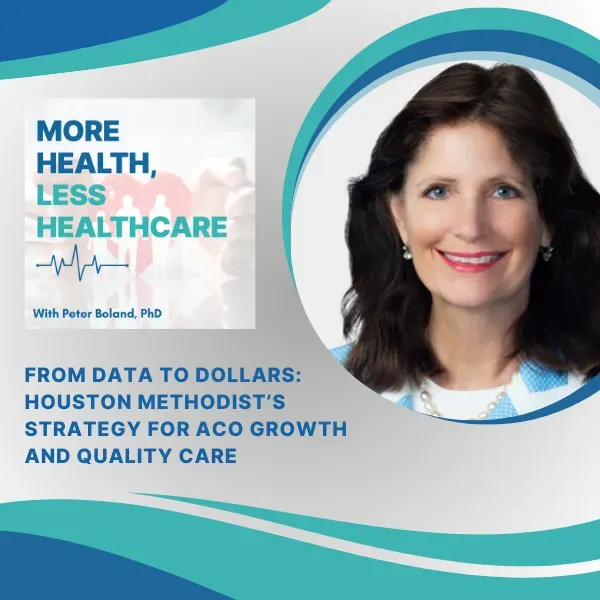
From Data to Dollars: Houston Methodist’s Strategy for ACO Growth and Quality Care
We’re so excited to announce our latest episode on More Health Less Healthcare! This time, Peter Boland sits down with the amazing Julie Andrieni —an inspiring leader with not just one, but multiple hats at Houston Methodist. If you’re interested in what’s working on the frontlines of healthcare transformation, especially around physician leadership and population health, you’ll love this insightful conversation.
Here are 5 keys you’ll learn in this episode:
The Power of Physician Buy-In
Julie Andrieni shares how involving primary care physicians from the very beginning—and giving them a genuine voice—can spark culture change and transform results.Data Transparency & Trust
Discover how unblinded, transparent data (yes, everyone sees everyone’s results!) has built a foundation of trust that helps practices improve year after year.Real Financial Incentives
It’s not all about pride (though that matters too!). Julie Andrini breaks down how their incentive structure rewards top performers and motivates everyone to deliver higher-quality care.Supporting the Whole Patient
Learn how Houston Methodist partners with community organizations—like food banks and even real estate agents—to address social needs that directly impact patient health.Patience, Persistence & Progress
The secret sauce? It’s a long game. Julie Andrieni reveals how their best results came after years of steady improvement—and why having leadership’s support from day one is non-negotiable.
Fun fact from the episode:
When Houston Methodist started sharing performance data transparently at practice meetings, the initial reaction from docs was, “The data isn’t right!” But after personally sitting down to review the numbers, what did they find? The data was right—and friendly competition (with trophies and honor rolls!) went through the roof.
Delivery Systems: Lessons Learned and Key Takeaways - Part 3
We’re excited to announce that Part 3 of our podcast series is now live! In this episode, Peter Boland brings us a whirlwind tour of best practices, lessons, and case studies from some of the most forward-thinking healthcare organizations across the country.
Here’s what you’ll learn in this episode:
Mission & Values Matter:
Discover why having strong mission and value statements is essential for driving strategy, guiding investments, and sustaining long-term commitment. Peter Boland dives into the importance of figuring out: are you all in, or just testing the waters?Collaboration Is Non-Negotiable:
Unpack how cross-cultural and cross-sector partnerships are absolutely necessary for success. No one comes to the table with a perfect record, but working together is the only way forward.
The Challenge of Power Sharing:
Find out why sharing power between healthcare professionals, executives, and the community isn’t just nice—it’s crucial. Peter Boland gives real-talk on why it’s one of the hardest shifts for any organization.Listening to the Patient & Community Voice:
Learn the art (and importance!) of deep listening—not just checking a box. Systems can only be improved when both patient and community perspectives are truly heard and valued.The Pivotal Role of CHWs & Cultural Health Navigators:
Get inspired by stories of Community Health Workers and Cultural Health Navigators who bridge the gap, build trust, and drive health equity—often standing shoulder to shoulder with doctors and nurses in shaping healthier communities.
Fun Fact:
Did you know that at University Hospital in Kansas City, this whole movement started with just a little card table by the hospital entrance? That’s right! From those humble beginnings, their team of Cultural Health Navigators has grown, becoming an absolutely key asset, especially for serving immigrant and refugee populations.
Delivery Systems: Lessons Learned and Key Takeaways - Part 2
We’ve just dropped Part 2 of our latest video on More Health, Less Healthcare, hosted by Peter Boland—and trust us, this one’s packed with inspiring takeaways from some of the most innovative healthcare organizations across the country!
Whether you’re a healthcare professional, advocate, or just love learning about powerful systems change, this episode is a must-watch. Here’s what you’ll learn:
5 Keys You’ll Discover in This Episode:
Community-Centric Change: Find out how Presbyterian Health in Albuquerque flips the traditional model by making local councils the trusted conveners, and how bottom-up collaboration creates more equitable communities.
Value-Based Care Done Right: Discover Houston Methodist's blueprint for quality improvement, monthly physician meetings, and a $50 million rebate—proving great care really can pay off.
Systems Change at Scale: Dive into CommonSpirit’s mind-blowing Total Health Roadmap, a masterclass in how you flip an entire organization (2,200 facilities!) to drive health outcomes nationwide.
Functional Medicine Innovations: See how Cleveland Clinic uses shared medical appointments for high-need diabetic patients, boosting outcomes and community peer support while cutting costs.
The Hidden Power of Health Literacy: Learn how Vanderbilt’s team tackles the health literacy crisis with a simple screening device—showing how understanding patients’ needs leads to better, safer care.
Fun Fact: Houston Methodist’s value-based care approach not only improved patient outcomes, but in just one year, it generated a $50 million rebate for the organization! Talk about healthy profits.
Delivery Systems: Lessons Learned and Key Takeaways - Part 1
In Part One, Peter Boland unpacks the high points from the first third of the book, focusing on healthcare delivery systems, and spotlights innovative, purpose-driven organizations aiming to generate more health—not just treat sickness.
Here are five keys you’ll learn in this episode:
Why Our System is Stuck (and How to Get Unstuck)
Discover the root causes behind America’s sickness-focused healthcare spending—and the insanity of pouring 97% into treatment and only 3% into prevention.How Boston Medical Center Transformed Patient Care
Learn the inside story of their pioneering food pantry, rooftop gardens, and true “patient first” philosophy (hint: they even teach families to cook healthy meals!).Breaking the Cycle with Nationwide Children’s
Find out how this pediatric hospital in Ohio took on the audacious goal of breaking the intergenerational cycle of poverty through housing, workforce, education, and economic initiatives.The Power of Zero Defects at Cleveland Hospital
Hear how a creative “fractal management” system demanded everyone—yes, everyone—be accountable for perfect care, slashing errors and saving millions.Why Collaboration is Everything
See how the best hospitals aren’t just treating patients—they’re partnering with local communities to share power and expertise, tailoring programs to real needs.
Fun Fact of the Episode:
Did you know the Boston Medical Center’s food pantry started in one doctor’s desk drawer? Today, it distributes over a million pounds of food per year and features rooftop gardens growing fresh produce for their patients!
Beyond Clinical Data: The Power of Social Determinants in Healthcare
What’s inside this episode?
Here are five key insights you’ll learn:
The Importance of Quantifying Social Risk: Discover how understanding social risk at both community and individual levels can help organizations get ahead of health crises—and save costs!
Analyze First, Act Second: Find out why Brenner Williams’s “analyze first” philosophy is revolutionizing how health plans and employers allocate resources for maximum impact.
How Employers Can Use Social Risk Data: Learn how self-insured employers and health plans are leveraging data to align benefits with real employee needs (think food, transportation, and financial support).
The Role of Socially Determined’s Platform, Socialscape: Get a peek behind the curtain at how this powerful tool aggregates and visualizes social risk with incredible detail.
Why Evidence and Integration Matter: Explore why integrating social risk models into financial reimbursement is the key to making these efforts sustainable for the long term.
Fun fact from the episode:
Did you know Trenor Williams started his entrepreneurial journey during the dot-com bubble in residency—and even ran a failed .com before launching innovative healthcare solutions?! Talk about learning through action!
Dr. Williams is a family physician, entrepreneur, former health system executive and consulting leader, and past founder and CEO of Clinovations, sold to the Advisory Board Company in 2014. In 2017, Dr. Williams co-founded Socially Determined to create an analytics platform that integrates the social determinants of health with clinical and claims data to quantify and visualize social risk and the specific impacts on health and healthcare outcomes. Dr. Williams’ unique perspective is formed at the intersection of healthcare and technology. He has an extensive understanding and knowledge in the implementation of healthcare technology, health plan market growth, and SDOH strategy development for leading healthcare stakeholders. He holds a Bachelor of Science in Biology from Virginia Polytechnic Institute and received his Medical Doctorate from Marshall University.
The Power of Empathy and Advocacy in Healthcare Navigation
We’re excited to announce our latest episode of More Health, Less Healthcare, featuring an inspiring deep dive into the University Hospital in Kansas City’s groundbreaking initiatives! Hosted by Peter Boland, with special guests Gabriella Gardner, Director of Language Assistance, and Deborah Sisco, Manager of Patient Advocacy and Engagement, this episode is packed with heartwarming stories, practical takeaways, and revolutionary approaches to health equity.
Here are the five keys you’ll learn in this episode:
The Magic of Cultural Health Navigators
Uncover the unique difference between cultural health navigators and community health workers, and see how this hybrid role goes beyond interpreting to offer hands-on support for immigrant, refugee, and limited English proficiency patients.Real-World Impact of Social Determinants of Health
Learn why understanding a patient’s life outside the clinic walls is crucial, and how collecting SDOH info leads to better outcomes.Fail Forward with Plan-Study-Do-Act
Find out how the PDSA methodology fueled innovation and adaptability across multiple clinics, allowing teams to learn, iterate, and succeed—even when things didn’t go as planned.Building Trust in Sensitive Settings
Dive into proven strategies for gathering personal info—whether it’s through paper forms, texts, or friendly conversation—and understand what works best in different communities.Essential Qualities for Health Navigators
Discover the three must-have traits for cultural health navigators: lived experience, cultural humility, and a passion for advocacy—and why empathy and tenacity are crucial in this role.
💡 Fun Fact:
Did you know University Hospital serves patients speaking over 200 different languages each year? Their navigators aren’t just bilingual—they genuinely understand and champion the unique challenges faced by the communities they serve.
How Community Voice is Shaping Presbyterian Healthcare Services' Approach to Behavioral Health and Social Needs in New Mexico
Discover how Presbyterian Health in New Mexico is putting community priorities at the center of its health equity work. In this episode, Leigh Caswell shares practical insights on scaling programs, leveraging partnerships, and tracking real community impact.
The unique “incubator” approach to developing and scaling community health initiatives
How behavioral health became a cornerstone priority based on community data
Defining and measuring “community health” across diverse populations and counties
Funding strategies, sustainability challenges, and lessons learned on managing grants
Looking ahead: plans for scaling, sustaining programs, and deepening community engagement
Tune in for real-world examples and actionable strategies to drive healthier communities beyond hospital walls.
Leigh Caswell serves as Vice President of Community and Health Equity with Presbyterian Healthcare Services (PHS).
Leigh coordinates and directs initiatives, strategy, and operations that support the community health priorities and health equity strategy of the largest non-profit, integrated health system in New Mexico. This work includes systems change initiatives, building programs, convening cross sector partnerships and leveraging grant and private funds for greater collective impact on barriers to health in communities across the state.
Leigh has a B.S. in Environmental Health from Colorado State University and a Masters of Public Health from the University of New Mexico.
Overcoming the Innovator’s Dilemma: Insights on Healthcare Leadership
We’ve got a treat for you this week on the “More Health, Less Healthcare” podcast! Our host Peter Boland sat down with Ann Somers, Director of Health Research at the Christensen Institute, for a thoughtful (and fun!) dive into how real innovation happens in healthcare—and why it sometimes stumbles.
Here’s what you’ll learn in this episode (and trust us, there are gems you won’t want to miss):
What the Christensen Institute Is All About
Summers explains how this nonpartisan think tank applies Harvard Business School Professor Clay Christensen’s famous business and innovation theories to healthcare, education, and beyond.Why Good Leaders Get Stuck
You’ll hear about the “Innovator’s Dilemma”—and why leaders often struggle to disrupt their own (successful!) business models, even when it’s necessary for future growth.The 4 Crucial Parts of Business Model Theory
Value proposition, resources, processes, and profit formula: Summers breaks down why these pillars can make or break a new healthcare initiative.How to Assess if an Innovation is Really Disruptive
Discover the Christensen Institute’s six-question test to see if an idea is truly disruptive—or just a shiny new thing.Tech Isn’t the Disruptor—Business Models Are
Generative AI alone won’t turn the world upside down! Summers and Peter Boland explore how pairing technology with innovative business models is the real secret sauce.
Fun Fact:
Did you know MinuteClinic started as a “not-as-good” alternative to a primary care visit—but succeeded precisely because it targeted non-consumers and made care more convenient? Sometimes, “good enough” is good enough to change everything!
Why Healthcare Costs Hold Back the American Dream and What Employers Can Do
New Episode: “Rosetta Unedited” featuring Peter Boland and Dave Chase, CEO of Health Rosetta.
About the Conversation: A bold, eye-opening discussion about the true cost of healthcare, system reform, and actionable strategies for organizations ready to make meaningful change.
5 Keys You’ll Learn in This Episode:
Why Healthcare Has “Killed the American Dream”: Dave Chase reveals how skyrocketing healthcare costs are hollowing out the middle class—with data to prove it.
The Health Rosetta Dividend—How Big Can It Get?: Learn how companies are cutting healthcare spending by up to 60% and reinvesting the savings into scholarships, daycare, and sustainability projects.
How to Take Action as an Employer: Hear the first steps leaders can take to slash costs and elevate employee benefits, from contract overhauls to advanced primary care models.
Inside the Plan Grader Tool: Discover how the Health Rosetta Plan Grader evaluates healthcare plans and provides actionable insights for improvement.
The Legal Wake-Up Call for Employers: Understand why boards and executives are now personally accountable for fiduciary responsibility in healthcare spending.
Fun Fact: A Bic pen has over 55,000 Amazon reviews, but health plans—representing 20% of the U.S. economy—rarely receive an objective value grade. That gap sparked Health Rosetta’s innovative Plan Grader tool.
Whole Person Care in Action: Inside Nationwide Children’s Healthy Neighborhoods, Healthy Families Initiative
New Episode Alert: “Housing Is Healthcare” featuring Nick Jones, Vice President of Community Wellness at Nationwide Children’s Hospital, hosted by Peter Boland.
About the Episode: Explore how stable housing and strong community infrastructure are revolutionizing health outcomes in Columbus—and what every healthcare leader can learn from it.
5 Keys You’ll Learn in This Episode:
Why Housing Is Healthcare: Understand why affordable housing is a cornerstone of population health and how access to safe homes creates lasting wellness.
The 5-Pronged Approach: Get the inside story on the Healthy Neighborhoods, Healthy Families initiative—covering housing, economic development, wellness, education, and community enrichment.
How to Build a Capital Stack: Learn how major affordable housing projects come together through creative financing, cross-sector partnerships, and trust.
Whole-Person, Whole-Family Care: Discover how wraparound services and “no wrong door” entrypoints keep families thriving in their homes, schools, and neighborhoods.
Measuring Real Results: Hear how the program tracks tangible outcomes like improved graduation rates, better kindergarten readiness, and millions reinvested locally.
Fun Fact: Nationwide Children’s Hospital has helped return over $5 million to the local community through its free tax preparation program—proof that caring goes well beyond clinical walls.
Unlocking Community Power: The Role of Pathways Community Health Worker in Holistic Care
Special Guest: Featuring Jan Ruma of the Pathways Community Help Institute, hosted by Peter Boland.
Theme: Discover how community-based innovation can transform health outcomes and reduce dependence on traditional healthcare systems.
5 Keys You’ll Learn:
What the Pathways Community Hub Model Is: Jan Ruma breaks down how this model streamlines access and support for those most in need.
Whole Person Care in Action: Explore how the Hub addresses social and economic factors—like housing, jobs, and transportation—that influence health.
Tracking Real Results: Understand the essential role of community health workers (CHWs), the “pathway” tracking process, and why continuous engagement matters.
How Payment for Outcomes Works: Learn how paying for real results—not just services—leads to both healthier communities and more efficient spending.
Getting Started & Scaling Up: Discover what it takes to fund, launch, and grow a successful Pathways Community Hub, plus the ROI you can expect.
Fun Fact: The average participating family has 6–7 open pathways, each targeting a different modifiable risk factor—creating truly coordinated, lasting change.
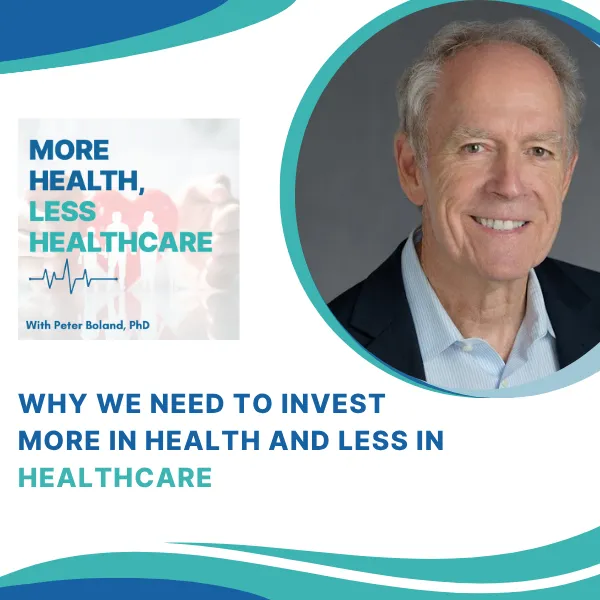
Why We Need to Invest More In Health and Less in Healthcare
We’re thrilled to bring you a new episode of the More Health, Less Healthcare podcast with host Peter Boland. This week, Peter sparks a thought-provoking conversation that redefines what we really mean by “healthcare”—and why true health starts long before treatment begins.
Episode Highlights: What You’ll Learn
Health vs. Healthcare: Learn why these terms aren’t interchangeable—and how our system functions more like a “sickness industry.”
Follow the Money: Discover why 97% of healthcare spending goes toward treating illness instead of preventing it.
Global Perspectives: Explore how other countries’ investments in social health create stronger, more resilient populations.
Rethinking the ‘Normal’: Understand why skyrocketing costs and social harm aren’t inevitable or “just the way things are.”
Actionable Hope:
Peter features forward-thinking organizations and the powerful Health Equity Case Studies Handbook, proving that real, scalable solutions already exist.
Health Equity Case Studies


Health Equity
Important links
© 2025 Berkeley, CA - All Rights Reserved.
